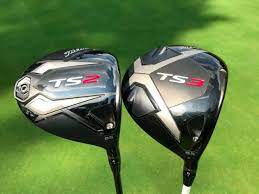
01 · The VerdictA lot of club for the money, and a lot of forgiveness for the miss.
Updated for 2026 — This article has been reviewed and updated with the latest recommendations.
Knowing the exact distance to the pin changes how you play golf. Instead of guessing whether you are 145 or 160 yards out and grabbing the wrong club, a rangefinder gives you a precise number so you can swing confidently. The question is whether you should go with a laser rangefinder or a GPS device, and the answer depends on how you play.
| Product | Best For | Price | Rating | Key Feature |
|---|---|---|---|---|
| Bushnell Pro X3+ | Overall pick (laser) | $500 | ★★★★★ | Slope switch, pinseeker JOLT |
| Garmin Approach Z82 | Hybrid GPS + laser | $600 | ★★★★★ | Course map overlay in viewfinder |
| Precision Pro NX10 | Budget laser | $200 | ★★★★☆ | Slope, pulse vibration, accurate |
| Garmin Approach S70 | Best GPS watch | $500 | ★★★★★ | AMOLED display, 43,000 courses |
| Shot Scope V5 | Budget GPS watch | $180 | ★★★★☆ | GPS + shot tracking, no fees |
02 · Laser Rangefinders: How They WorkLaser Rangefinders: How They Work
A laser rangefinder looks like a small monocular.
You point it at the flag, press a button, and a laser beam bounces off the flagstick and returns. The device calculates the distance based on how long the laser took to travel there and back. Accuracy is typically within half a yard to one yard.
The main advantage is precision. You are measuring the exact distance to whatever you point at, whether it is the flag, a bunker, a tree, or the front edge of the green.
This is especially useful on courses you have never played before, since you do not need preloaded course maps.
The main disadvantage is that you have to physically point the device and hold it steady. In windy conditions or when your hands are shaking from cold (or pressure), locking onto the flagstick can take a few seconds. Most modern laser rangefinders have flag-lock or pulse vibration features that alert you when you have locked onto the flag rather than something behind it.
03 · GPS Devices: How They WorkGPS Devices: How They Work
GPS rangefinders use satellite positioning and preloaded course maps to calculate distances.
They come in several forms: dedicated handheld units, GPS watches, and phone apps. They show distances to the front, center, and back of the green, along with hazards and layup distances, all without having to aim at anything.
The main advantage is convenience and speed. Glance at your watch or handheld and you instantly see distances to everything you need. GPS watches give you yardages as you walk without reaching into your bag.
They also provide aerial views of holes, which is incredibly helpful on blind shots and unfamiliar courses.
The disadvantage is accuracy. GPS devices are typically accurate to within 2 to 5 yards, which is less precise than a laser. They measure to predetermined points (center of green, front edge) rather than to the actual pin position, which can be 10 to 15 yards from center on a big green.
04 · Best Laser RangefindersBest Laser Rangefinders
- Bushnell Tour V6 Shift - Around $299: The industry standard.
Slope compensation (adjusts distance for elevation changes), fast flag lock with a jolt vibration, 6x magnification, and excellent optics. The Shift version has a switch to disable slope for tournament play. Used by more tour caddies than any other brand. Check Latest Price
- Precision Pro NX10 - Around $199: Best value laser rangefinder. Slope mode, magnetic mount for carts, and accuracy within 1 yard.
It does not have quite the build quality of the Bushnell, but the performance is nearly identical for $100 less. Free battery replacement for life. Check Latest Price
- Callaway 400s Slope - Around $249: Solid mid-range option with slope, 6x magnification, and a compact design. Fast readings and reliable flag lock. The price frequently drops below $200 during sales.
05 · Best GPS DevicesBest GPS Devices
- Garmin Approach S70 (GPS Watch) - Around $499: The best GPS golf watch available. Full-color AMOLED display, preloaded with 43,000+ courses worldwide, accurate yardages, and smart notifications. Also works as a full smartwatch for daily wear. The touchscreen green view lets you drag the pin to the actual position for more accurate distances.
- Garmin Approach S42 (GPS Watch) - Around $249: A more affordable GPS watch with the same course database. Smaller screen and fewer smartwatch features than the S70, but the golf functionality is excellent. Battery lasts about 15 hours in GPS mode (enough for 2 to 3 rounds). Check Latest Price
- Bushnell Phantom 3 (GPS Handheld) - Around $99: A simple, clip-on GPS device with a clear display showing front, center, and back of green distances plus hazards.
No subscription required. Magnetic mount clips to the cart. The simplest way to get GPS yardages. Check Latest Price
06 · Which Should You GetWhich Should You Get
If you play competitively or want the most accurate pin distance possible, get a laser rangefinder. The Precision Pro NX10 at $199 is the best value, and the Bushnell Tour V6 Shift at $299 is the premium choice.
If you value convenience, want hazard distances without aiming, and like having a golf watch you can wear daily, a GPS watch is the way to go. The Garmin S42 at $249 is the sweet spot of price and features.
Many golfers end up using both: a GPS watch for quick glances at general distances during the round, and a laser for dialing in exact pin distances on approach shots. If you can only pick one, a laser rangefinder will serve you better on the course because pin accuracy matters most when you are selecting a club for an approach shot.
07 · Specs & FitWhat you get in the box.
◆ Handicap Fit · Tester Consensus
08 · Pros & ConsThe short version.
- Mishit forgiveness that flatters the average amateur swing.
- Launch window suits mid-handicap swing speeds (78–92 mph).
- Hybrid replacements are genuinely playable, not token additions.
- Price-to-performance is the best in the golf equipment category right now.
- Feel on pure strikes is muted versus forged competition.
- Wide sole can be a liability on firm, tight lies.
- Offset is generous — faders will need to account for it.
- Stock grip is functional but forgettable.
09 · AlternativesIf this one isn't right for you.

Golf Club Fitting Guide: What to Expect and Why It Matters