Most golfers only practice at the range, and most range sessions involve mindlessly hitting driver. That is not how you get better. The good news is that the parts of your game that actually save the most strokes (putting, chipping, and swing mechanics) can all be practiced at home with minimal equipment and space.
02 · Putting PracticePutting Practice
Putting is where strokes live and die, and it is the easiest skill to practice at home.
All you need is a putter, a ball, and a flat surface.
A putting mat ($30 to $100) gives you a consistent surface with a target cup. The PUTT-A-BOUT Grassroots Par Three is a solid budget option. The BirdieBall Putting Green rolls more realistically for about twice the price. Both fit in a hallway or living room.
Drill: Place five balls at three feet from the cup. Make all five in a row.
If you miss, start over. Once you can consistently make 5 out of 5 from three feet, move back to six feet. This builds confidence in the range where most golfers three-putt from.
Drill: Practice speed control by putting to a specific distance without a target. Lay a towel on the floor 10 feet away. Try to stop every ball on the towel. Distance control matters more than accuracy for lag putting, and this drill builds it.
03 · Chipping PracticeChipping Practice
If you have a backyard with any amount of grass, you can chip.
A chipping net ($20 to $40) gives you a target. Real golf balls are fine if you have space. Foam practice balls work for smaller yards and indoor use.
Focus on one chip shot at a time. Set up 10 to 15 feet from the net and hit bump-and-run chips with your 8-iron or 9-iron. Work on consistent contact: ball first, ground second. Once that feels automatic, switch to a wedge and add loft.
Indoor chipping onto a pillow or into a laundry basket builds touch without requiring outdoor space.
The trajectory changes with foam balls, but the mechanics and hand feel transfer.
04 · Swing Mechanics at HomeSwing Mechanics at Home
You do not need to hit balls to improve your swing. Mirror work and slow-motion swings are some of the most effective ways to groove mechanics.
Stand in front of a full-length mirror and take slow-motion swings. Watch your takeaway, check your position at the top, and observe your impact position. Slow motion lets you see things that happen too fast during a real swing. You can feel positions rather than just swinging through them.
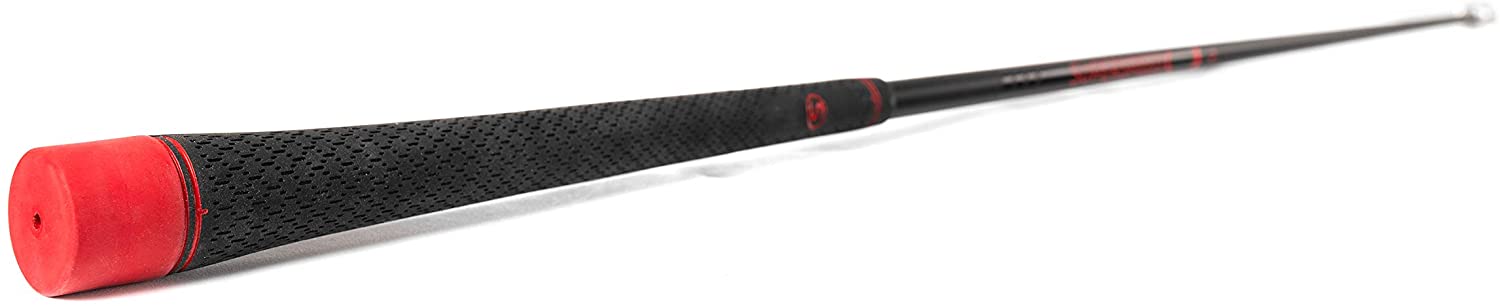
The Orange Whip or SKLZ Gold Flex weighted swing trainers are perfect for indoor swing practice. They build tempo and sequence without needing a ball or space for a full follow-through.
Film yourself.
Set your phone up on a tripod or shelf and record your swing from face-on and down-the-line angles. Compare your positions to tour player reference videos. The visual feedback is more valuable than any verbal instruction.
05 · Fitness and FlexibilityFitness and Flexibility
Flexibility directly affects your ability to make a full turn. Golfers who can rotate their torso 90 degrees generate more speed than golfers limited to 70 degrees.
Simple daily stretches for your hips, thoracic spine, and shoulders improve rotation over time.
Hip 90/90 stretches, thoracic spine rotations over a foam roller, and shoulder pass-throughs with a broomstick take 10 minutes per day. Do them while watching TV. After a month, you will notice more turn, more speed, and less back discomfort during rounds.
Core strength matters for power transfer from lower body to upper body.
Planks, Russian twists, and med ball rotations build the core strength that drives a powerful swing. Two or three 15-minute sessions per week make a noticeable difference.
06 · Mental PracticeMental Practice
Visualization is a legitimate practice method used by elite golfers. Before bed or during quiet moments, close your eyes and mentally play your home course. See each shot, feel the swing, watch the ball flight.
This mental rehearsal strengthens the neural pathways for shot execution, and research shows it improves on-course performance.
Watch professional golf with intention. Instead of just spectating, study how tour players manage the course. Watch their pre-shot routines, their club selection decisions, and how they handle adversity. Observational learning is one of the most underrated practice methods in golf.