A chip shot that travels the right distance but finishes slightly left or right of the hole still leaves a makeable putt. A chip shot that starts on line but rolls ten feet past or comes up eight feet short creates a much harder putt and often leads to a bogey or worse. Distance control is the most important element of good chipping.
02 · The Landing Spot ApproachThe Landing Spot Approach
Good chippers do not aim at the hole. They aim at a landing spot on the green and let the ball roll the rest of the way. This approach simplifies the distance control problem because you only need to control how far the ball flies in the air. The roll takes care of itself based on the club you chose and the speed of the green.
Before every chip shot, walk to the green and identify a specific spot where you want the ball to land. Pick a discolored patch of grass, a small divot repair, or an imaginary point on the surface. The more specific your target, the better your focus will be when you stand over the shot.
The landing spot should be just on the green, ideally a few feet onto the putting surface. Landing the ball on the fringe or rough introduces too much variability because the longer grass slows the ball unpredictably. Landing it well onto the green means the ball is rolling on a consistent surface for most of its journey to the hole.
03 · One Swing, Multiple ClubsOne Swing, Multiple Clubs
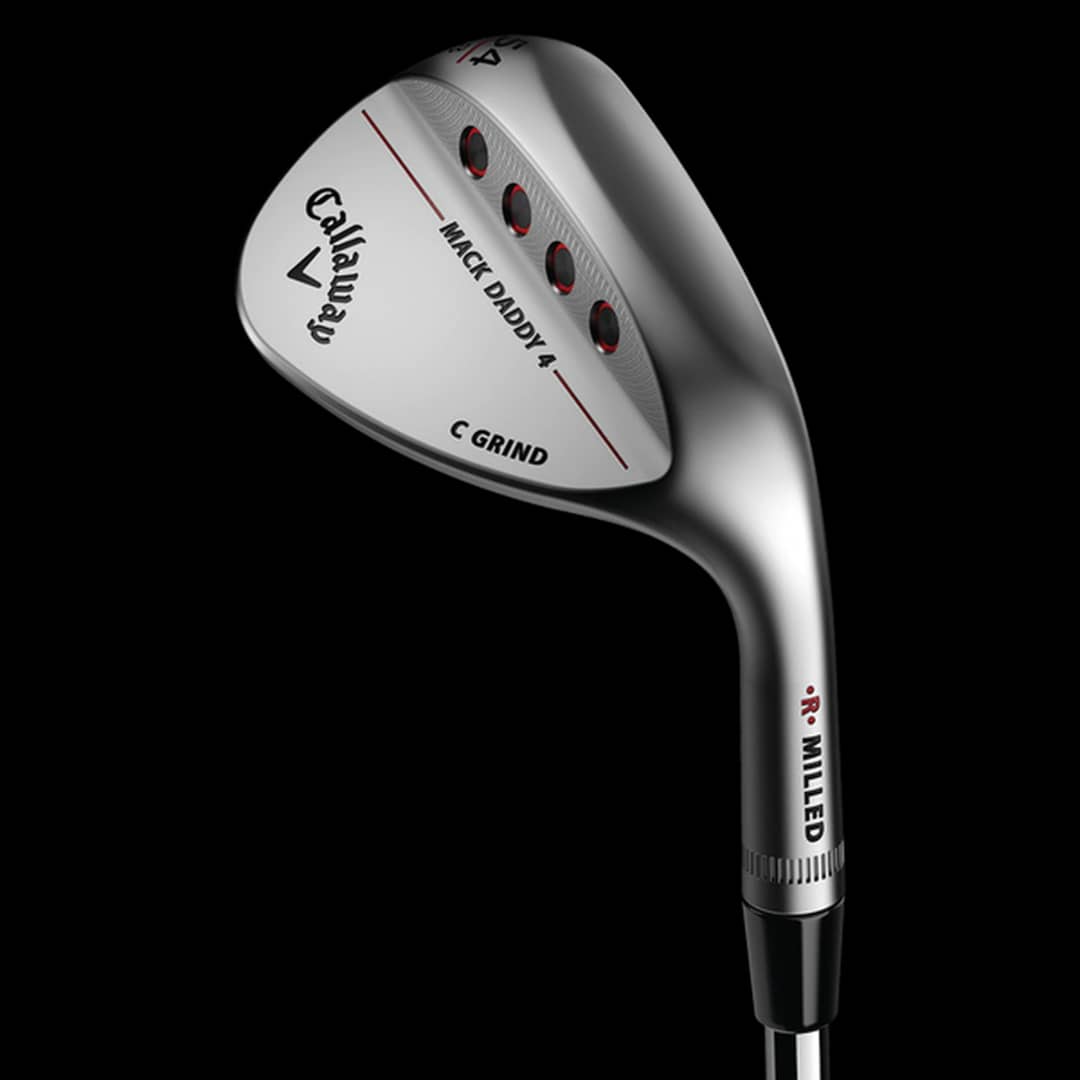
Rather than changing the length and force of your swing for different chip distances, keep a consistent swing and change clubs to produce different distances. A pitching wedge, 9-iron, 8-iron, and 7-iron each produce a different ratio of carry to roll when chipped with the same swing.
A pitching wedge might fly 40 percent of the total distance and roll 60 percent. A 7-iron might fly 20 percent and roll 80 percent. By keeping your swing consistent and selecting the club that matches the carry-to-roll ratio you need, you reduce the number of variables you have to control.
Spend time on the practice green hitting chips with each of these clubs using the same swing. Note how far each club carries the ball and how far it rolls. Write these ratios down. On the course, you select the club whose ratio matches the shot you need rather than trying to manufacture a new swing for every situation.
04 · Swing Length Controls DistanceSwing Length Controls Distance
When you do need to vary your swing, change the length of the backswing rather than the force. A longer backswing produces a longer shot. A shorter backswing produces a shorter shot. The tempo and acceleration through the ball should remain the same regardless of the backswing length.
Many amateurs try to control chip distance by decelerating through impact. This is the most common mistake in chipping and the one that causes the most problems. Deceleration leads to fat chips, thin chips, and completely unpredictable distances. Your swing should accelerate smoothly through the ball on every chip shot.
Practice three specific backswing lengths: hands to knee height, hands to hip height, and hands to chest height. With your most-used chipping club, these three positions should produce three predictable distances. Knowing those distances gives you a framework for controlling distance on the course.
05 · Setup FundamentalsSetup Fundamentals
Consistent chipping starts with a consistent setup. Position the ball slightly back of center in your stance. Place 60 to 70 percent of your weight on your front foot. Your hands should be ahead of the ball, leaning the shaft slightly forward. Keep your feet close together, about 12 inches apart.
This setup promotes a downward strike that contacts the ball first and then the turf. Ball-first contact is essential for distance control because it produces consistent launch angles and spin rates. When you hit the turf before the ball, the grass and dirt between the clubface and the ball change the energy transfer in unpredictable ways.
Keep your lower body quiet during the chip. The swing is primarily an arm and shoulder motion. Excess lower body movement introduces inconsistency. Your legs provide a stable foundation while your arms and shoulders swing the club back and through.
06 · Practice Drills for Distance ControlPractice Drills for Distance Control
The towel drill gives you immediate feedback on landing accuracy. Lay a towel flat on the practice green at your intended landing spot. The towel creates a clear visual target that is easy to evaluate. Chip balls and try to land them on the towel. The towel dampens the ball's roll, making it obvious whether you hit the landing spot or missed.
The clock drill maps your swing lengths to distances. Set up at the practice green and chip five balls with a knee-height backswing, noting where they stop. Then chip five balls with a hip-height backswing. Then chest height. Mark each group's average finishing distance. Now you have a personal distance chart for that club and swing combination.
The up-and-down drill adds on-course pressure to your practice. Drop a ball at various locations around the practice green and try to get up and down in two shots (one chip and one putt). Keep track of your success rate out of ten attempts. As you improve, your percentage will climb, giving you a measurable benchmark for your short game progress.
07 · Common Distance Control MistakesCommon Distance Control Mistakes
Deceleration is the number one problem, as mentioned above. If you consistently leave chips short, you are likely slowing the club through impact. Focus on making the follow-through the same length as the backswing. This ensures that the club accelerates through the ball.
Using too much wrist action creates inconsistent distance because the timing of the wrist release affects how much energy reaches the ball. Keep your wrists firm throughout the chip. The motion should feel like a pendulum driven by your shoulders, not a flipping action with your hands.
Changing clubs too infrequently is another mistake. Many amateurs use their most lofted wedge for every chip shot, trying to fly the ball most of the way to the hole. This requires more precise distance control than necessary. A lower-lofted club that flies the ball a short distance and rolls it most of the way is a higher-percentage play in most situations.
Distance control in chipping is a learnable skill that responds to structured practice. The techniques are not complicated, but they require repetition to become reliable under pressure. Invest time in these drills, and the strokes you save around the greens will show up on your scorecard.